








Mental health is an essential part of living a healthy, balanced, and fulfilling life. It influences how people think, feel, handle stress, build relationships, and respond to everyday challenges. Every year, World Mental Health Day encourages individuals, families, workplaces, schools, and communities to recognize the importance of emotional well-being and make mental health support more accessible.
World Mental Health Day 2026 will be observed on Saturday, October 10, 2026. This global awareness day highlights the importance of listening to people who have experienced mental health challenges, reducing stigma, and ensuring that their voices help shape mental health services and policies.
The official 2026 theme is “Lived Experiences Heard: Real Voices, Real Change.” The campaign emphasizes that listening to people with firsthand experience of mental health conditions should lead to meaningful action, better support services, and more inclusive communities.
Whether you are looking for World Mental Health Day history, the meaning of this year’s theme, or practical ways to support mental well-being, this guide explains everything you need to know about the 2026 observance.
When Is World Mental Health Day 2026?
World Mental Health Day takes place every year on October 10. In 2026, the observance falls on a Saturday, giving families, community organizations, schools, and workplaces an opportunity to participate in awareness activities and conversations about mental health.
Here are the key details for this year’s observance:
- Event Name: World Mental Health Day 2026
- Date: Saturday, October 10, 2026
- Frequency: Annually
- Purpose: To raise awareness of mental health issues and encourage access to appropriate support and care
- Official Theme: Lived Experiences Heard: Real Voices, Real Change
- Main Focus: Listening to people with lived experience and including their perspectives in decisions about mental health care
The World Health Organization (WHO) recognizes October 10 as an opportunity to strengthen public awareness, encourage meaningful participation, and promote better mental health services worldwide.
What Is World Mental Health Day?
World Mental Health Day is an international awareness observance dedicated to promoting mental health and encouraging action to improve psychological well-being.
Mental health affects people of every age, background, and community. Challenges such as anxiety, depression, prolonged stress, grief, loneliness, and other mental health conditions can affect daily activities, relationships, education, and employment.
Despite growing awareness, many people still hesitate to seek help because they fear judgment, discrimination, or misunderstanding. Others face financial, geographic, or practical barriers that make professional support difficult to access.
World Mental Health Day provides an opportunity to challenge these barriers. It encourages people to discuss mental health openly, recognize the importance of professional care, and create environments where individuals can ask for support without embarrassment.
The observance also reminds governments, healthcare providers, employers, educators, and community organizations that mental health deserves attention alongside physical health.
History of World Mental Health Day
World Mental Health Day was first observed in 1992 through an initiative of the World Federation for Mental Health, an international organization dedicated to promoting mental health awareness and improving care.
The original goal was to create a shared occasion when people across different countries could discuss mental health concerns and encourage greater understanding of psychological well-being.
Over time, the observance developed into a global awareness campaign involving healthcare organizations, governments, educational institutions, workplaces, and community groups.
The World Health Organization has helped promote the day by highlighting important mental health issues and encouraging action to improve services and support systems.
Different annual campaigns have focused on subjects such as mental health in emergencies, workplace well-being, access to care, and the importance of treating mental health as a fundamental part of overall health.
In 2026, the campaign places particular emphasis on the experiences of people living with mental health conditions and the importance of including them in decisions that affect their lives.
This development reflects an important principle: people who have experienced mental health challenges possess valuable knowledge about the support they need, the barriers they encounter, and the changes that could improve their lives.
World Mental Health Day 2026 Theme and Its Meaning
The official theme for World Mental Health Day 2026 is “Lived Experiences Heard: Real Voices, Real Change.”
The theme calls attention to the experiences of people who have personally faced mental health conditions or sought mental health support. It encourages organizations and decision-makers to listen to these individuals and involve them in developing policies, services, and programs.
What Does Lived Experience Mean?
Lived experience refers to the knowledge and understanding a person gains through personal experiences. In mental health, this may include experiencing anxiety or depression, navigating treatment, recovering from a difficult period, supporting a family member, or encountering barriers to care.
Every person’s experience is different. There is no single story that represents everyone living with a mental health condition.
People with lived experience can identify problems that may not be obvious to professionals or policymakers. Their perspectives can help make mental health services more accessible, respectful, practical, and responsive to individual needs.
Why Does the 2026 Theme Matter?
The theme highlights the difference between simply hearing someone’s story and giving that person a meaningful role in decisions.
For example, a healthcare organization might invite people to describe their experiences with treatment. However, meaningful participation goes further by involving those individuals in designing services, reviewing policies, evaluating outcomes, and identifying areas that need improvement.
The campaign encourages a shift from speaking about people with mental health conditions to working alongside them.
This approach can help reduce stigma, improve trust, protect dignity, and strengthen mental health support systems.
Why Is World Mental Health Day Important?
Mental health affects how people manage everyday responsibilities, maintain relationships, make decisions, and respond to life’s challenges. Giving it appropriate attention can benefit individuals, families, workplaces, and entire communities.
1. It Raises Awareness
Many people misunderstand mental health conditions or believe that emotional struggles are signs of personal weakness. Awareness campaigns help explain that mental health challenges are genuine concerns that deserve understanding and appropriate care.
2. It Helps Reduce Stigma
Stigma can prevent people from discussing their feelings or seeking professional help. World Mental Health Day encourages respectful conversations and challenges harmful stereotypes about mental illness.
3. It Encourages People to Seek Support
Recognizing that help is available can make it easier for someone to speak with a trusted person, counselor, psychologist, psychiatrist, or healthcare professional.
Seeking support is a positive step toward understanding difficulties and identifying appropriate ways to manage them.
4. It Promotes Early Support
Recognizing persistent emotional distress early can help people access support before their difficulties become more disruptive. Friends, family members, teachers, and colleagues can play an important role by responding with patience and compassion.
5. It Encourages Better Mental Health Services
The observance draws attention to the need for accessible, affordable, respectful, and person-centered mental healthcare.
It also emphasizes that people with firsthand experience should participate in shaping services intended to support them.
6. It Supports Healthy Communities
Communities become more supportive when people feel comfortable discussing mental health, asking for help, and treating others with dignity.
Schools, workplaces, families, and local organizations can all contribute to creating environments that protect emotional well-being.
Common Mental Health Challenges to Understand
World Mental Health Day is an opportunity to learn about mental health conditions and recognize when additional support may be helpful.
Anxiety
Anxiety can involve excessive worry, fear, restlessness, or physical symptoms such as a racing heartbeat. Occasional anxiety is a normal human response, but persistent or overwhelming anxiety may require professional assessment.
Depression
Depression can affect mood, energy, interest in activities, sleep, concentration, and daily functioning. It is more than simply feeling sad for a short time, and professional support can help people understand and manage it.
Stress and Burnout
Long-term pressure from work, education, caregiving, financial difficulties, or other responsibilities can contribute to significant stress. When pressure continues without adequate recovery, it may affect sleep, motivation, relationships, and overall well-being.
Loneliness and Social Isolation
People can experience loneliness even when surrounded by others. Supportive relationships, community participation, and opportunities for meaningful connection can help reduce isolation.
Grief and Emotional Difficulties
Loss, major life changes, family problems, and difficult experiences can affect emotional health. People respond differently to these challenges, and some may benefit from additional support while navigating them.
These examples are not a diagnostic checklist. Only a qualified professional can assess an individual’s circumstances and help determine what kind of support may be appropriate.
How to Celebrate World Mental Health Day 2026
There are many meaningful ways to observe World Mental Health Day. You do not need to organize a large event or spend money to participate.
1. Start an Open Conversation
Talk with friends, relatives, or colleagues about the importance of mental health. Listen without interrupting, dismissing concerns, or immediately offering solutions.
A simple question such as “How have you really been feeling lately?” can create an opportunity for an honest conversation.
2. Check on Friends and Family
Reach out to someone who may be experiencing a difficult period. A phone call, thoughtful message, or invitation to spend time together can help them feel remembered and supported.
Avoid assuming that someone is fine simply because they appear cheerful or continue with their daily responsibilities.
3. Share Reliable Mental Health Information
Use social media to share educational resources from trusted healthcare organizations. Explain the importance of emotional well-being and encourage people to seek appropriate support when needed.
Avoid sharing unverified medical claims or presenting personal experiences as universal solutions.
4. Organize a School or Workplace Activity
Schools, universities, and workplaces can arrange awareness sessions, discussions, workshops, or presentations about stress management, emotional well-being, and respectful communication.
Activities should protect participants’ privacy and never pressure anyone to disclose personal mental health experiences.
5. Practice Healthy Daily Habits
Make time for activities that support overall well-being, including regular physical activity, adequate sleep, balanced meals, relaxing hobbies, and social connection.
These habits can contribute to well-being, although they are not substitutes for professional treatment when treatment is needed.
6. Learn How to Listen Without Judgment
One of the simplest ways to support mental health is to listen with patience.
Allow people to express themselves in their own words. Avoid telling them to stop worrying, comparing their struggles with someone else’s, or suggesting that they should simply be stronger.
7. Support Mental Health Organizations
Consider volunteering, participating in awareness campaigns, or supporting reputable organizations that provide education, peer support, counseling, or mental healthcare.
Before donating, verify the organization’s identity, activities, and use of funds.
How to Support Someone Experiencing Mental Health Difficulties
Supporting someone who is struggling can feel challenging, especially when you are unsure what to say.
The most helpful approach is often to show patience, respect, and genuine interest rather than trying to solve everything immediately.
Listen carefully. Give the person time to explain their feelings. Do not interrupt or assume you already understand their experience.
Acknowledge their feelings. You might say, “That sounds really difficult,” or “Thank you for trusting me enough to tell me.”
Avoid judgment. Mental health challenges are not evidence of laziness, weakness, or a lack of character.
Offer practical help. Ask whether they would appreciate assistance with an everyday task, finding a qualified professional, or arranging an appointment.
Respect their privacy. Do not share personal information without permission, except where disclosure is necessary to address an immediate safety concern.
Encourage professional support when appropriate. If their difficulties persist, worsen, or interfere with everyday life, suggest speaking with a qualified mental health professional.
If someone appears to be in immediate danger or may harm themselves, take the situation seriously and seek urgent help from local emergency services or an appropriate crisis-support service.
Remember that supporting another person does not mean you must manage their difficulties alone. You can care about someone while maintaining healthy boundaries and seeking guidance when necessary.
World Mental Health Day Activities for Schools and Colleges
Educational institutions can use October 10 to encourage understanding, emotional awareness, and respectful communication among students.
Here are some practical ideas:
- Mental health awareness presentations: Explain the relationship between mental health, physical health, learning, and relationships.
- Student discussion groups: Create voluntary opportunities for students to discuss stress, belonging, and healthy coping strategies.
- Poster-making competitions: Invite students to create messages promoting kindness, inclusion, and help-seeking.
- Well-being workshops: Discuss sleep, study routines, managing academic pressure, and balancing responsibilities.
- Counselor information sessions: Introduce students to available support services and explain how to access them.
- Kindness initiatives: Encourage students to perform small acts of kindness and support classmates who may feel excluded.
Participation should be voluntary, and students should never be required to share private experiences publicly.
World Mental Health Day Activities for Workplaces
Workplaces can play a meaningful role in supporting mental well-being by creating conditions where employees feel respected and able to discuss concerns safely.
Organizations can observe the day through activities such as:
- Offering educational sessions about stress and burnout.
- Sharing information about employee assistance programs or counseling resources.
- Encouraging reasonable workloads and regular breaks.
- Training managers to recognize concerns and respond respectfully.
- Promoting work-life balance and healthy communication.
- Inviting employees to provide confidential feedback about workplace well-being.
- Reviewing policies that affect inclusion, psychological safety, and access to support.
Employers should avoid treating a single awareness event as a substitute for addressing workplace conditions that contribute to distress.
Long-term improvements require consistent attention, meaningful employee participation, and practical changes where needed.
How Families Can Promote Mental Well-Being at Home
Families can create a supportive environment by making emotional conversations a normal part of everyday life.
Parents and caregivers can encourage children to name their feelings, ask questions, and seek help when something worries them. Adults can also benefit from talking openly about stress and demonstrating healthy ways to manage difficult emotions.
Helpful family practices include:
- Setting aside time for conversations without distractions.
- Listening to children without immediately criticizing or dismissing their feelings.
- Maintaining reasonable routines for sleep, meals, school, and recreation.
- Spending time together through walks, games, shared meals, or hobbies.
- Respecting personal boundaries and individual differences.
- Seeking professional guidance when emotional difficulties persist or affect daily life.
A supportive home does not have to be perfect. What matters is creating an environment where family members can ask for help and feel that their concerns will be taken seriously.
World Mental Health Day Messages, Quotes, and Captions for 2026
Sharing a thoughtful message is a simple way to spread awareness on October 10. These original messages can be used in social media posts, school activities, workplace communications, or community campaigns.
Short World Mental Health Day Messages
- Mental health matters every day, not just on October 10.
- Listening with kindness can make someone feel less alone.
- Asking for help is a sign of courage, not weakness.
- Every person’s mental health journey deserves respect.
- A supportive conversation can be the beginning of positive change.
- Make space for honest conversations and compassionate listening.
- Mental health deserves the same care and attention as physical health.
Inspirational World Mental Health Day Quotes
- “Your feelings deserve to be heard, and your well-being deserves care.”
- “A kinder conversation can help create a more supportive world.”
- “Real change begins when listening leads to meaningful action.”
- “You do not have to face every difficult moment alone.”
- “Understanding grows when we listen without judgment.”
These are original awareness messages, not quotations attributed to public figures.
World Mental Health Day 2026 Social Media Captions
Caption 1:
Today, October 10, we recognize World Mental Health Day 2026. This year’s theme, “Lived Experiences Heard: Real Voices, Real Change,” reminds us that every voice matters. Let’s listen with compassion, challenge stigma, and support access to respectful mental healthcare.
Caption 2:
Mental health is an essential part of overall well-being. This World Mental Health Day, check on someone you care about, share reliable information, and remember that asking for support is a positive step.
Caption 3:
Real voices deserve to be heard. Real experiences deserve respect. This October 10, let’s turn mental health awareness into meaningful action and build communities where everyone can seek support without fear or shame.
Suggested hashtags: #WorldMentalHealthDay #MentalHealthAwareness #MentalWellBeing #EndMentalHealthStigma #RealVoicesRealChange
How to Make Mental Health Support More Accessible
Awareness is important, but it must be accompanied by practical steps that help people obtain the support they need.
Governments and healthcare systems can improve access by strengthening community-based services, integrating mental healthcare into general healthcare, supporting trained professionals, and reducing financial and geographic barriers.
Schools and workplaces can help by making support resources easier to find, protecting privacy, and establishing clear procedures for responding to concerns.
Communities can contribute by challenging discrimination, supporting peer-led initiatives, and making reliable information available in accessible languages and formats.
People with lived experience should be involved in designing and evaluating these services. Their participation can help identify gaps, improve trust, and ensure that support reflects real needs.
The World Health Organization’s 2026 campaign also emphasizes the importance of person-centered, rights-based care and stronger community support for people living with mental health conditions.
Progress requires more than a public message. It requires listening, collaboration, accountability, and sustained investment in effective support systems.
Frequently Asked Questions About World Mental Health Day 2026
1. When is World Mental Health Day 2026?
World Mental Health Day 2026 will be observed on Saturday, October 10, 2026.
2. What is the official theme of World Mental Health Day 2026?
The official theme is “Lived Experiences Heard: Real Voices, Real Change.” It emphasizes meaningful participation by people with firsthand experience of mental health conditions in decisions that affect their lives.
3. Who started World Mental Health Day?
World Mental Health Day was first observed in 1992 through an initiative of the World Federation for Mental Health.
4. Why do we celebrate World Mental Health Day?
The observance raises awareness, challenges stigma, encourages supportive conversations, and promotes efforts to improve access to mental healthcare.
5. How can I participate in World Mental Health Day?
You can participate by sharing reliable information, checking on friends and family, organizing an awareness activity, supporting a reputable mental health organization, or learning how to respond compassionately when someone is struggling.
6. Is mental health as important as physical health?
Yes. Mental and physical health are closely connected and both contribute to overall well-being. Mental health difficulties deserve appropriate attention and support.
7. What does lived experience mean in mental health?
Lived experience refers to firsthand knowledge gained by people who have experienced mental health conditions or navigated mental healthcare. Their perspectives can help improve services and policies.
8. How can I support a friend who is struggling emotionally?
Listen without judgment, acknowledge their feelings, offer practical assistance, respect their privacy, and encourage professional support when appropriate. If there is an immediate safety concern, seek urgent help.
9. Is World Mental Health Day celebrated in the United States?
Yes. Individuals, healthcare organizations, schools, workplaces, nonprofits, and community groups in the United States can participate in World Mental Health Day activities and awareness campaigns.
10. What is the main message of World Mental Health Day 2026?
The central message is that people with lived experience must be genuinely heard and included in decisions about mental health care. Listening should lead to practical improvements, greater dignity, and more responsive support.
Conclusion
World Mental Health Day 2026, observed on Saturday, October 10, is an important opportunity to recognize mental health as an essential part of overall well-being.
This year’s theme, “Lived Experiences Heard: Real Voices, Real Change,” reminds us that people who have experienced mental health challenges should have meaningful opportunities to shape the services, policies, and decisions that affect their lives.
Everyone can contribute to this goal. We can listen more carefully, challenge harmful stereotypes, check on people we care about, share reliable information, and support access to appropriate mental healthcare.
Most importantly, awareness should continue beyond a single day. Building healthier communities requires compassion, practical support, and a lasting commitment to treating every person with dignity and respect.
This World Mental Health Day, let us make listening the beginning of meaningful change and help create a world where everyone can seek support and feel heard.
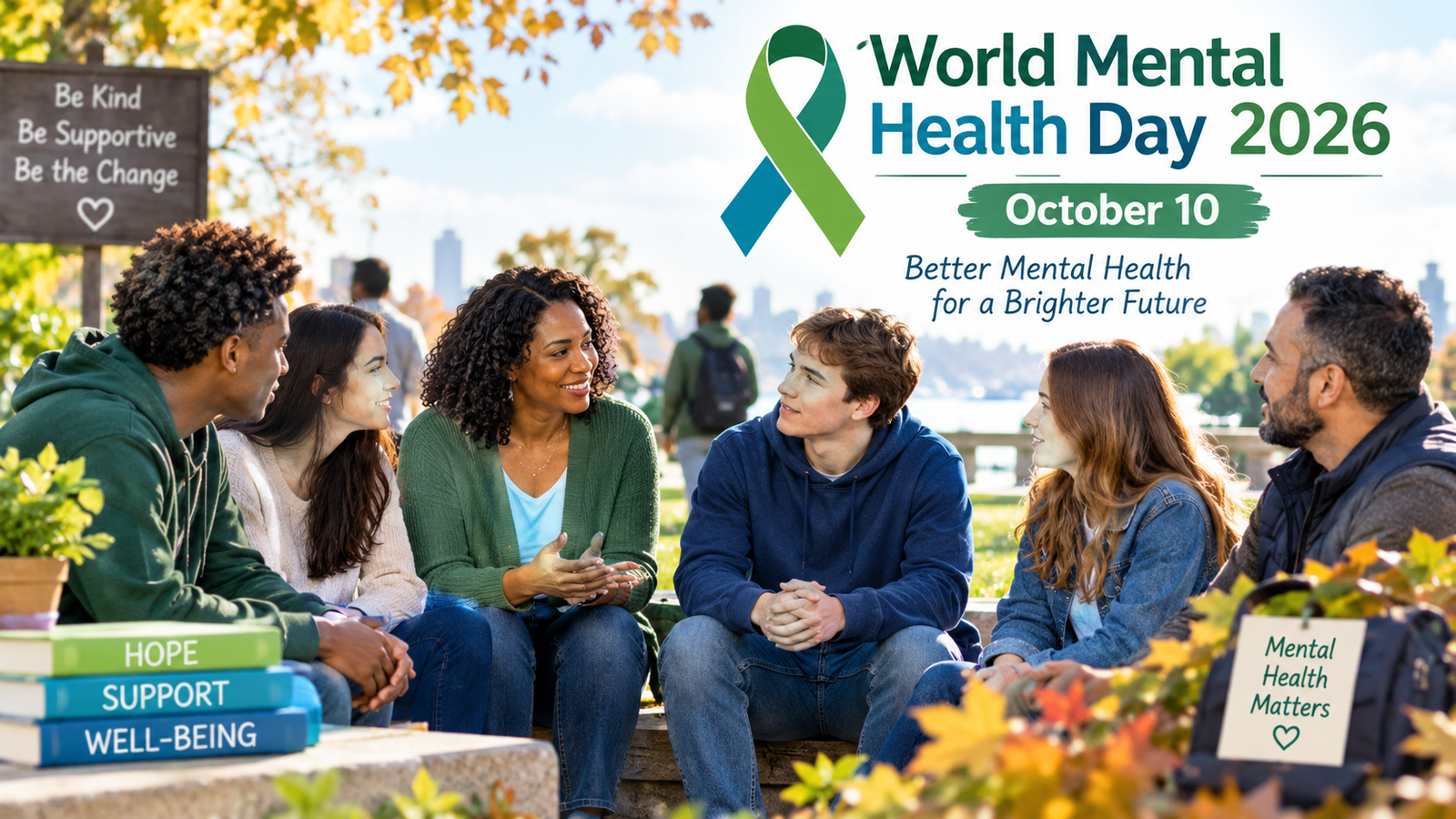
Featured Image Description: A warm, hopeful World Mental Health Day 2026 awareness scene featuring a diverse group of American adults and young people having a supportive conversation in a peaceful community setting, with soft natural lighting, subtle green and blue awareness colors, gentle autumn details, and an inclusive, compassionate atmosphere. Include a tasteful mental health awareness ribbon and the text “World Mental Health Day 2026 — October 10” in a clean, professional layout suitable for a USA events website.