




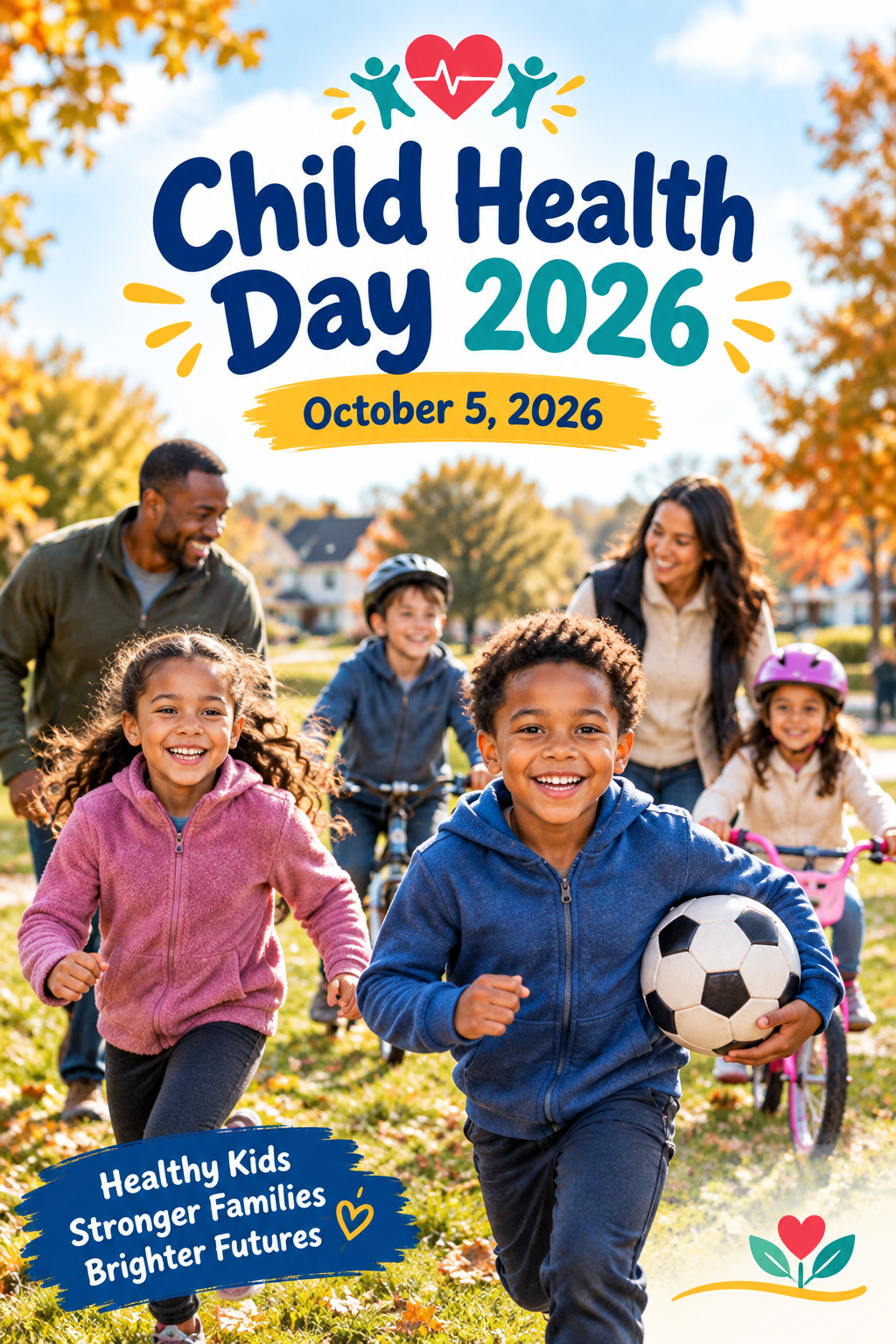
Child Health Day 2026 will be observed in the United States on Monday, October 5, 2026. The annual observance highlights the importance of protecting children’s health and encouraging families, communities, schools, health professionals, and organizations to support the well-being and healthy development of children.
Whether you are a parent, teacher, caregiver, healthcare professional, or community member, Child Health Day is a meaningful opportunity to focus on children’s physical, mental, emotional, and overall well-being.
When Is Child Health Day 2026?
Child Health Day is observed on the first Monday of October every year. In 2026, the observance falls on Monday, October 5.
Unlike fixed-date observances, the date of Child Health Day changes from year to year because it is tied to the first Monday of October.
Here are several upcoming Child Health Day dates:
- 2026: Monday, October 5
- 2027: Monday, October 4
- 2028: Monday, October 2
- 2029: Monday, October 1
- 2030: Monday, October 7
The date is established in Title 36, Section 105 of the United States Code, which requests that the President issue an annual proclamation designating the first Monday in October as Child Health Day.
What Is Child Health Day?
Child Health Day is a U.S. national observance dedicated to raising awareness about the importance of children’s health and development.
The federal statute encourages agencies and organizations concerned with child welfare to participate in activities that help Americans understand the importance of year-round efforts to protect and develop children’s health.
The observance provides an opportunity to think beyond treating illness. Children’s health also involves prevention, healthy development, safety, nutrition, physical activity, emotional well-being, access to healthcare, and supportive family and community environments.
Why Is Child Health Day Important?
Children’s health has a lasting effect on their development and future quality of life. Supporting children early can help families address health and developmental needs while also creating healthier communities.
Child Health Day encourages Americans to make children’s well-being an ongoing priority rather than something considered only on one special day.
Parents and caregivers can use the day as a reminder to review children’s health needs, encourage healthy habits, spend meaningful time together, and seek professional guidance when concerns arise.
Schools, healthcare organizations, community groups, and other organizations can also use the occasion to share reliable information and promote programs that support children and families.
The History of Child Health Day
Child Health Day has a history dating back nearly a century. The observance was first established in 1928, when Congress approved a joint resolution requesting an annual presidential proclamation for Child Health Day. The U.S. Health Resources and Services Administration’s Maternal and Child Health Bureau identifies 1928 as the year the first National Child Health Day was declared by President Calvin Coolidge.
The original observance was associated with May 1. Presidential proclamations from the early decades show Child Health Day being observed on May 1.
The observance was later moved to the first Monday in October. Current federal law preserves that date and calls for an annual presidential proclamation.
Child Health Day and U.S. Federal Law
Child Health Day is included in Title 36 of the United States Code, which covers patriotic and national observances and ceremonies.
Section 105 states that the President is requested to issue a proclamation each year designating the first Monday in October as Child Health Day. It also calls on agencies and organizations interested in child welfare to unite in activities that increase public awareness of the importance of protecting and developing children’s health throughout the year.
This makes Child Health Day a federally recognized national observance, although it is not a federal public holiday that generally results in a nationwide day off from work or school.
How Is Child Health Day Observed?
Child Health Day does not have one required national celebration or a single official ceremony. Families and organizations can observe it in ways that encourage healthier lives for children.
Common ways to recognize the day include:
- Talking with children about healthy habits.
- Encouraging age-appropriate physical activity.
- Preparing nutritious family meals.
- Scheduling or reviewing routine healthcare appointments.
- Learning about children’s mental and emotional well-being.
- Discussing safety at home, school, and online.
- Sharing reliable child-health information with other parents.
- Supporting local programs that serve children and families.
- Organizing educational activities at schools or community organizations.
- Spending quality, screen-free time with children.
The most important idea behind the observance is that children’s health deserves attention throughout the entire year.
Child Health Day Activities for Families
Families can make Child Health Day simple, positive, and age-appropriate. You do not need to organize a large event to make the day meaningful.
Plan a Family Health Day
A family health day can be an opportunity to review healthy routines together. Parents can talk with children about sleep, food, movement, hygiene, safety, and emotional well-being.
Keep the conversation positive and focus on building healthy habits rather than creating pressure.
Get Active Together
Physical activity can be turned into a family activity. Depending on age and ability, families might take a walk, ride bicycles, play outside, visit a park, or enjoy an active game together.
The goal is to make movement enjoyable and part of everyday family life.
Prepare a Healthy Meal Together
Cooking together can help children learn about food and nutrition. Parents can let children participate in age-appropriate tasks such as washing produce, mixing ingredients, or choosing fruits and vegetables for a meal.
Talk About Mental and Emotional Well-Being
Children’s health includes more than physical health. Parents and caregivers can create a comfortable environment where children feel able to talk about their feelings, worries, friendships, school experiences, and other concerns.
If a child is experiencing persistent emotional or behavioral difficulties, families should consider speaking with an appropriate healthcare or mental health professional.
Child Health Day Activities for Schools and Communities
Schools and community organizations can use Child Health Day as an educational opportunity.
Possible activities include:
- Child-health awareness presentations
- Nutrition education
- Age-appropriate fitness activities
- School wellness activities
- Safety discussions
- Health-themed classroom projects
- Family wellness newsletters
- Community health fairs
- Parent education sessions
- Children’s physical activity events
Activities should be appropriate for children’s ages and abilities and should rely on accurate, trustworthy health information.
Ways to Support Children’s Health Every Day
Child Health Day is intended to encourage year-round attention to children’s health, not just a single day of awareness.
Parents and caregivers can support children’s well-being by building healthy routines and staying attentive to changing needs.
Important areas include:
Regular Healthcare
Routine healthcare can help families monitor children’s development and address concerns. Parents should follow guidance from their child’s healthcare professionals regarding checkups, vaccinations, screenings, and other recommended care.
Healthy Nutrition
Children need nutritious foods and appropriate portions as they grow. Families can encourage balanced eating patterns that include a variety of foods.
Physical Activity
Regular movement is an important part of a healthy childhood. Families can choose activities that children enjoy and that are appropriate for their age and abilities.
Healthy Sleep
Adequate sleep is important for children’s growth, learning, mood, and daily functioning. Establishing consistent bedtime routines can help children develop healthy sleep habits.
Emotional Support
Children benefit from supportive relationships with parents, caregivers, teachers, and other trusted adults. Listening to children and taking their concerns seriously can help create a secure and supportive environment.
Safety
Child safety includes many areas of everyday life, including home safety, transportation, sports, water safety, online activity, and interactions with other people.
Child Health Day 2026 and the Importance of Community
Children do not grow and develop in isolation. Families, schools, healthcare professionals, community organizations, and government agencies all have roles in creating environments where children can thrive.
The federal purpose of Child Health Day specifically encourages organizations interested in child welfare to work together to increase awareness of children’s health needs.
That makes the observance particularly relevant for community groups, churches, schools, healthcare organizations, and families looking for meaningful ways to support children.
Child Health Day and the White House
Presidents have issued messages and proclamations recognizing Child Health Day for decades.
In 2025, the White House published a Presidential Message on Child Health Day on October 6. The message emphasized protecting the health and well-being of American children and highlighted issues including nutrition, physical activity, and children’s online safety.
Earlier presidential proclamations also demonstrate the long-standing federal recognition of the observance. For example, President Joe Biden issued a Child Health Day proclamation for 2024, designating Monday, October 7, 2024, as Child Health Day.
Is Child Health Day a Federal Holiday?
No. Child Health Day is a national observance, not a federal holiday.
The United States Code recognizes Child Health Day and requests an annual presidential proclamation, but the observance does not establish a nationwide federal day off from work or school.
Businesses, schools, healthcare facilities, and government offices generally continue operating according to their normal schedules unless they independently choose to hold activities or events for the observance.
Is Child Health Day the Same as Children’s Day?
No. Child Health Day specifically focuses on children’s health and well-being.
Other children’s observances exist in the United States and around the world, but they may have different purposes, dates, and histories. Child Health Day is specifically established in U.S. federal law as the first Monday in October.
How Can You Celebrate Child Health Day 2026?
Child Health Day 2026 can be observed through small actions that make children’s health a family and community priority.
Here are some simple ideas:
- Spend active time outdoors with your children.
- Prepare a nutritious meal together.
- Talk with children about healthy daily routines.
- Review important safety habits.
- Encourage children to talk openly about their feelings.
- Share trustworthy health information with other parents.
- Support a local organization serving children.
- Thank teachers, caregivers, nurses, doctors, and other professionals who support children’s well-being.
- Schedule appropriate healthcare appointments if they are due.
- Take a moment to pray for the health, protection, growth, and well-being of children.
For faith-based families, Child Health Day can also be an opportunity to pray for children, parents, caregivers, educators, healthcare workers, and communities.
A Simple Child Health Day Prayer
Child Health Day can be a meaningful time for families to combine practical care with prayer and gratitude.
Dear God, please protect and bless children everywhere. Give them health, strength, safety, love, and the support they need to grow and thrive. Guide parents, caregivers, teachers, and healthcare workers as they care for children. Help our communities create safe and healthy places where every child can grow with hope and dignity. Amen.
Child Health Day 2026: Frequently Asked Questions
These common questions provide quick answers about the date, history, and meaning of Child Health Day.
When is Child Health Day 2026?
Child Health Day 2026 will be observed on Monday, October 5, 2026. It is held on the first Monday of October each year.
What is Child Health Day?
Child Health Day is a U.S. national observance that raises awareness about protecting and promoting children’s health and development.
When did Child Health Day begin?
Child Health Day dates back to 1928, when Congress approved a joint resolution calling for an annual presidential proclamation. The first National Child Health Day was declared by President Calvin Coolidge.
Is Child Health Day a federal holiday?
No. It is a federally recognized national observance, but it is not a federal holiday that provides a nationwide day off.
Who can participate in Child Health Day?
Everyone can participate. Parents, children, schools, healthcare professionals, community organizations, faith-based groups, and other organizations can use the day to promote children’s health and well-being.
What can families do for Child Health Day?
Families can celebrate by being active together, preparing healthy food, discussing safety and emotional well-being, reviewing healthcare needs, supporting healthy routines, and spending meaningful time together.
Final Thoughts on Child Health Day 2026
Child Health Day 2026 is more than a date on the calendar. It is a reminder that children’s health deserves attention, support, and care throughout the entire year.
On Monday, October 5, 2026, families and communities across the United States can use the observance to encourage healthy habits, promote children’s safety and well-being, support parents and caregivers, and recognize the people who help children grow and thrive.
Most importantly, Child Health Day reminds us that investing in children’s health today helps build healthier families and stronger communities for the future.